

Here is a number worth sitting with: Generation Z pet owners in the United States are spending an average of $6,103 per pet, per year. A quarter of them are taking on debt to do it. That figure, from a 2025 Harris Poll, does not come from a fringe group of pet-obsessed outliers. It comes from an entire consumer generation that has quietly decided pets are a financial priority on roughly the same level as rent.
The pet furniture market is, in part, the product of that shift. Worth roughly $4.03 billion globally in 2025 and projected to reach $5.71 billion by 2031, it is one of the more consistent growth stories in consumer goods right now. And nowhere is that growth more visible than in what is happening to the dog bed, which, depending on where you shop, now looks less like pet gear and more like something a boutique hotel would use.
What Changed, and When
The term that shows up in almost every piece of pet market research right now is ‘pet humanization’, the sustained, documented trend of owners treating pets as family members rather than animals kept in the house. It has been building since the mid-2010s, but the pandemic gave it a significant push. Pet ownership rose from 67% to 70% of US households between 2021 and 2024 alone, according to the APPA National Pet Owners Survey, with many of those new owners acquiring pets as companions during extended time at home. The spending habits that formed during that period haven’t wound back down.
What it means practically is that premium dog beds 2026 are no longer a luxury segment aimed at a narrow audience. A 67% majority of US pet owners have created dedicated spaces in their homes specifically for their pets. Beds and sofas account for the largest single product category in the pet furniture market, around 38% to 42% of total revenue depending on which analyst you read, and that share has been growing consistently as product design moves upmarket to meet a buyer who is choosing with different criteria than they were five years ago.
What ‘Premium’ Actually Means Now
The entry-level dog bed has not changed much. Polyester fill, a removable cover if you’re lucky, a price point that makes it easy to replace without thinking too hard about it. What has changed is the layer above that, which has expanded and stratified considerably. Orthopedic memory foam beds, designed specifically around joint health in aging dogs, now represent 28% of the premium segment. Temperature-regulating materials, borrowing the same technology used in human performance bedding, are appearing in products at the mid-to-upper price range. At the very top, smart dog furniture incorporating activity tracking and health monitoring is projected to generate $142 million in 2026 sales alone.
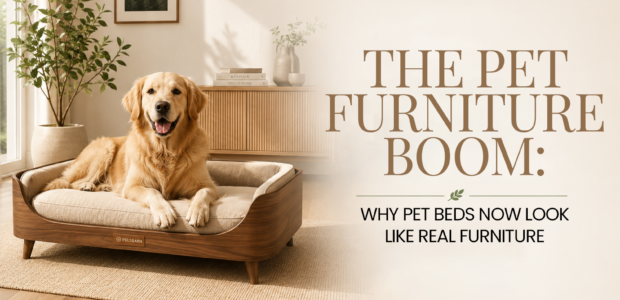
Running alongside the health-focused innovation is a design-focused one. Manufacturers are increasingly sourcing the same fabric categories used in human furniture, boucle, performance chenille, FSC-certified wood frames, walnut veneer, and building them into dog beds specifically because the buyer wants the product to live in the living room without visual apology.
A dog bed as home decor was a niche concept five years ago. In 2026, it is a product category that major retailers are actively expanding into, with Petco introducing 800-plus new pet product SKUs in late 2025 and Ruggable launching a washable pet bed line in partnership with designer Jonathan Adler.
Why Online Is Where This Market Lives
Online sales now account for 42.1% of total dog furniture market revenue as of 2026. That is not incidental to the premium shift, it is partly what made it possible. A mass retail shelf has limited space and gravitates toward the price points that move the most units. An online channel has no shelf constraints. Buyers searching for a specific material, a specific aesthetic, or a specific size can find exactly what they are looking for in a way that would have required an expensive specialist retailer ten or fifteen years ago. The premium end of the market grew, in large part, because the internet gave it a distribution channel it didn’t previously have.
What This Means If You’re Actually Shopping
None of the market dynamics above are particularly useful if you just need a bed for a dog. What they do tell you is that the range of options available at a meaningful quality level is wider than it has ever been, and that the price premium for a design-forward or orthopedic bed has been compressing as more manufacturers enter the space. You no longer need to spend luxury money to get a bed that looks considered and lasts more than one winter.
If you are shopping the pet furniture trend and want a starting point, Pelsbarn’s dog bed range sits in that mid-to-upper tier where design and durability tend to meet without reaching luxury pricing. Current verified discount codes for Pelsbarn and other pet brands are on the pet supplies page, updated as new deals go live.